Observability Beyond Monitoring
Building Intelligent, Scalable, and Resilient Software Systems
- 6 Parts | 2.5+ hours of content
- For beginners and advanced users
🇬🇧 English

From Monitoring to Intelligent Observability
Modern software systems generate an ever growing amount of telemetry, but collecting metrics, logs, and traces is only the beginning. As cloud native architectures, AI powered applications, LLMs, and platform engineering become more complex, teams need observability strategies that provide actionable insights instead of isolated data.
In this course, you’ll discover how modern observability helps engineering teams understand distributed systems, accelerate incident response, improve developer experience, and operate reliable applications across cloud, AI, and serverless environments.
Observability for the Next Generation of Software Systems
This course combines conference talks, technical articles, and practical case studies to explore observability from multiple perspectives. You’ll learn how to automate observability platforms, apply OpenTelemetry to AI workloads, improve alert quality using statistical methods, strengthen LLM development through observability, and establish observability as a core capability of platform engineering.
Whether you’re building cloud native platforms, operating AI applications, or modernizing enterprise infrastructure, this course provides practical knowledge you can apply immediately.

Take Your Skills to The Next Level
- 2 Sessions powered by our strong communities
- 3 Articles from our popular magazine brands
- 1 exclusive Fullstack Live-Event Recording
Session | Simplifying and Scaling Observability for Non Enterprise Teams | Benjamin Lykins
Learn how to automate observability platforms using Terraform, Nomad, Vault, Grafana, and Infrastructure as Code. Discover practical deployment patterns, dynamic configuration, and automation strategies that make enterprise grade observability accessible to smaller engineering teams.
Session | De slobbing AI Observability with OpenTelemetry | Robin Jungbauer
Explore how OpenTelemetry enables observability for LLMs, AI agents, and modern AI infrastructure. Learn how to monitor autonomous systems, improve transparency, and detect issues such as hallucinations, prompt injection, and data leakage.
Article | Generative AI and Observability in the Serverless World | Diana Todea
Understand how AIOps, MLOps, and LLM observability are transforming DevOps. Discover how machine learning improves automation, predictive operations, and reliability across serverless and cloud native environments.
Article | Observability: The Statistics Behind the Alerts | Dave McAllister
Learn why effective observability depends on more than dashboards. Explore how mean, median, mode, and other statistical concepts help reduce alert noise, improve monitoring accuracy, and create more meaningful operational insights.
Article | Accelerating the LLM Development Cycle with Observability | Torsten Bøgh Köster
Discover why observability is essential for developing reliable LLM applications. Learn how telemetry supports quality assurance, debugging, evaluation, and continuous improvement throughout the AI development lifecycle.
Fullstack Live Event Recording | Embedding Observability as a Platform Engineering Pillar | Stelios Moschos
See how observability becomes a strategic capability within platform engineering. Learn practical patterns including observability as code, golden paths, self service platforms, and scalable monitoring across AWS, containers, serverless systems, and Infrastructure as Code.
Expert Knowledge for...
Platform Engineers who want to build scalable and self service observability platforms.
DevOps Engineers who want to automate observability across cloud native infrastructure.
Site Reliability Engineers who want to improve incident detection and operational resilience.
Cloud Architects who want to implement observability for distributed and serverless systems.
- AI Engineers who want to monitor LLM applications and agent based AI systems effectively.

Complete the Course and Learn How to...
Build scalable observability platforms using automation and Infrastructure as Code.
Monitor AI and LLM applications with OpenTelemetry and modern telemetry standards.
Improve alert quality using statistical analysis and meaningful metrics.
Accelerate AI development through observability driven quality assurance.
- Embed observability as a fundamental pillar of platform engineering.
The Experts of your Course
Benjamin Lykins
HashiCorp
Expert in: Observability, Infrastructure as Code, DevOps Automation

Robin Jungbauer
Splunk
Expert in: OpenTelemetry, AI Observability, Cloud Native Infrastructure
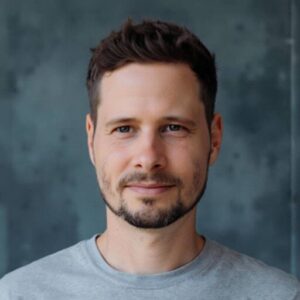
Diana Todea
Elastic
Expert in: AIOps, MLOps, Serverless Observability

Dave McAllister
NGINX
Expert in: Observability, Statistics for Monitoring, Performance Analytics

Torsten Bøgh Köster
Freelance Search & Operations Engineer
Expert in: LLM Observability, AI Engineering, Machine Learning Operations

Stelios Moschos
Informa
Expert in: Platform Engineering, Observability, Cloud Architecture

Diesen Inhalt freischalten
Mit der Fullstack Membership greifst du auf alle entwickler.de-Inhalte zu — Live-Events, Tutorials, Kurse und deine Konferenzsessions inklusive.
- ✓ Zugang zu allen Live-Events, Tutorials, Magazinen & Kursen
- ✓ AI-Assistenz mit Wissen aus zusätzlich 5.000+ Konferenzsessions
- ✓ Kostenfreier Zugang zum entwickler Summit 2026
- ✓ 30.000+ Inhalte & Rabatte auf Konferenz-Events
249,90 €
/ Jahr
= 20,83 € / Monat · inkl. MwSt.
Du bist bereits ein Fullstack Member? Dann logge dich auf entwickler.de ein und starte den Kurs. Jetzt einloggen