entwickler Summit

17. September 2026

More Impact Than Ever

Software teams are shaping the future at entwickler Summit.
The event for developers, architects & software professionals who build the technology of tomorrow.

0 +

Participants

The core of the entwickler.de community comes together.

0 +

Sessions

Featuring top experts from the industry.

0

Day

Packed with content, exchange, and innovation.

0 %

Community

All entwickler.de communities united in one place.

HOMO MENSURA

You Are the Measure of All Things

AI is accelerating the impact of software on our world and never before have developers had so much influence in their hands.

Whether Homo codus or Homo promptus isn’t the real question. In software, we’ve experienced many paradigm shifts. What has remained constant? We came together, we collaborated, and we evolved. Because humans remain the measure of all things, Homo mensura.

That’s exactly what we celebrate at entwickler Summit 2026: A day where developers come together to shape technology with more impact than ever before.

community

Exclusive for the Community

A UNIQUE FORMAT

One Day Feels Like a Whole Week

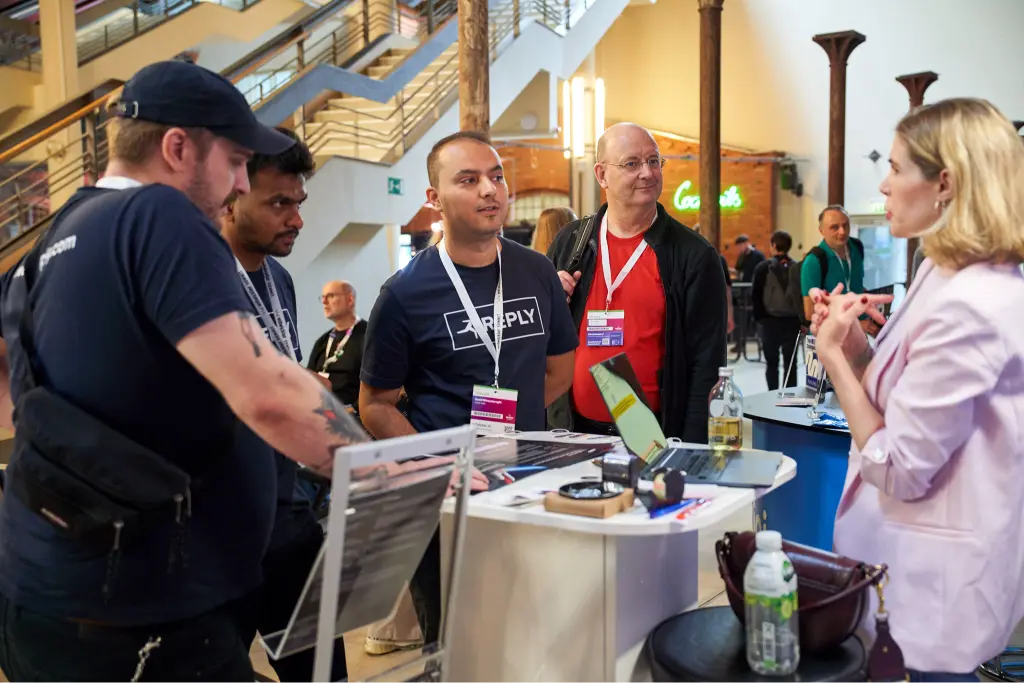
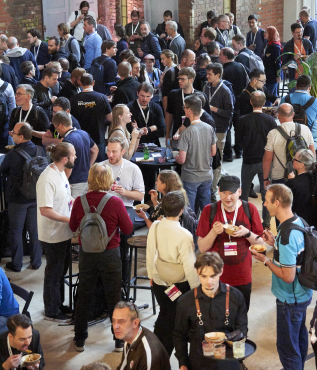
The best insights don’t happen on a schedule, they happen in conversations.

Besonderes Format

EXPERIENCE THE SUMMIT

What It Feels Like

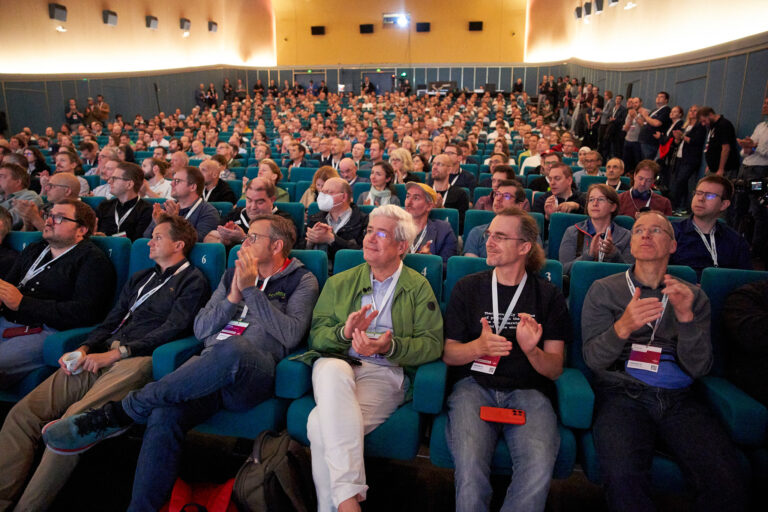
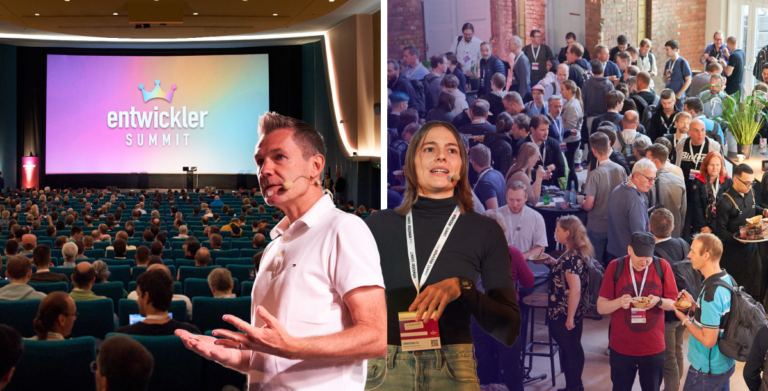
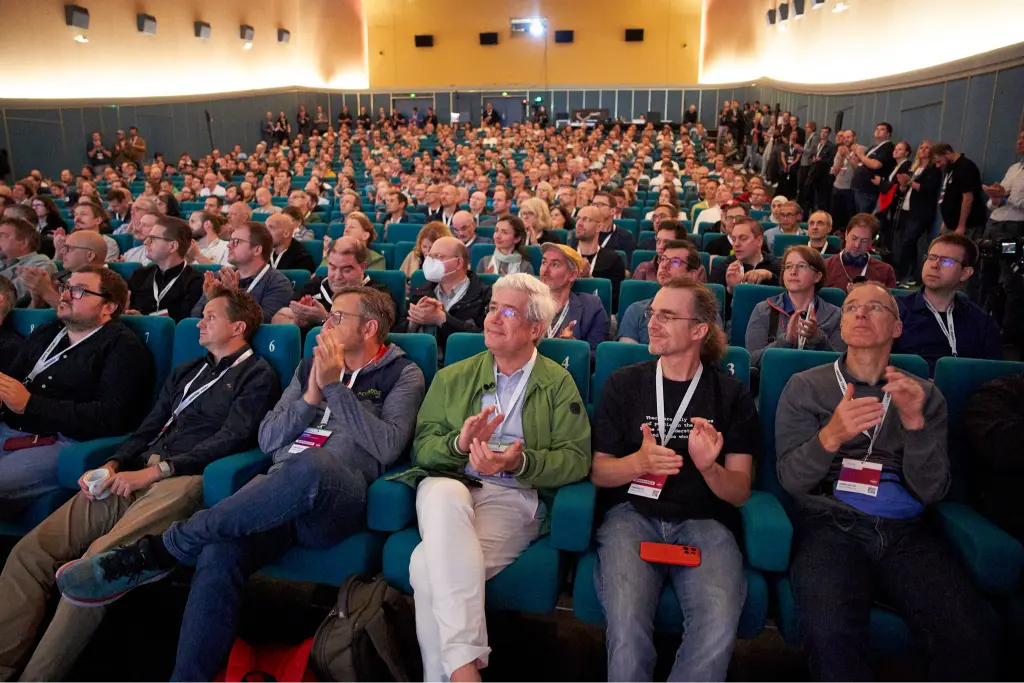
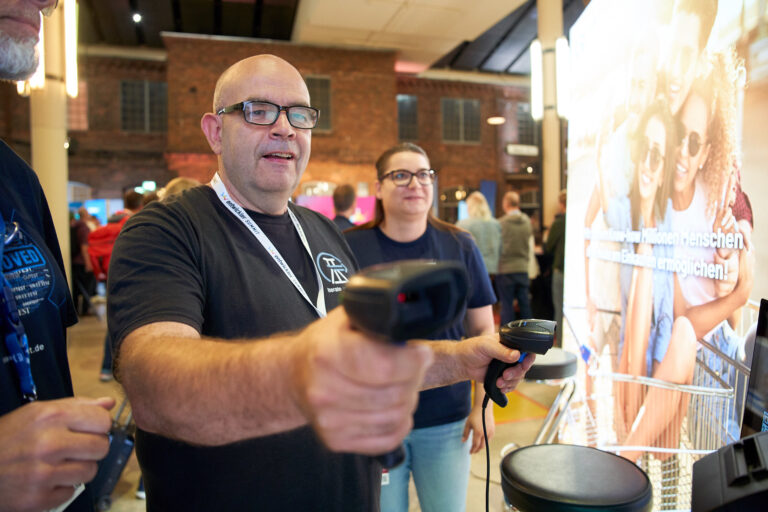
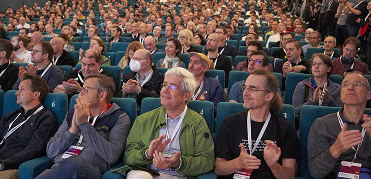
A day where ideas emerge, perspectives shift, and conversations continue what starts on stage.

entwickler Summit 2025

How to Join

Stop Pretending You Review AI-Generated Code Line by Line

SESSION

Stop Pretending You Review AI-Generated Code Line by Line

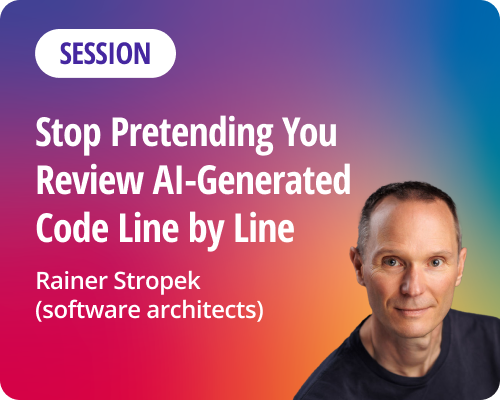
Code reviews are yesterday, input is the new quality lever. Instead of reviewing every line of AI-generated code, success depends on setting the right conditions.
This session shows how clear requirements, solid test data, and automated feedback loops ensure quality and why shaping AI agents matters more than reviewing their output.

30 Years in Software — and Now Vibe Coding

SESSION

30 Years in Software — and Now Vibe Coding

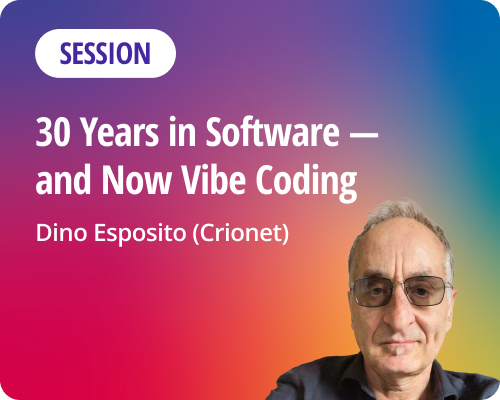
Vibe coding is here to stay. After decades of so-called “revolutions” from CASE tools to CMS and low-code platforms, this time is different. Vibe coding isn’t a limitation; it’s a new interface to software development. AI already generates, analyzes, and optimizes code across technologies in production.
This session explores why this shift is structural, how it reshapes software engineering, and what it means for developers and architects. The key question: How do we grow the next generation of engineers in a world where writing code is no longer the hardest part?

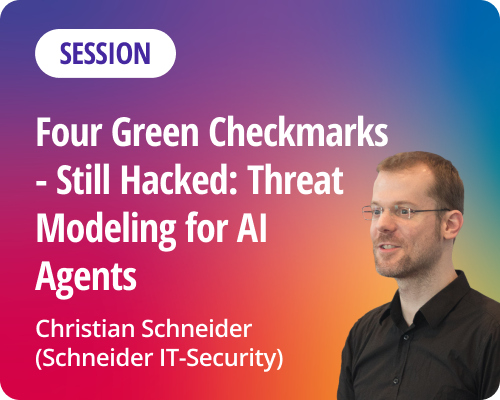
Four Green Checkmarks

SESSION

Four Green Checkmarks—Still Hacked: Threat Modeling for AI Agents

Understand and secure new attack patterns introduced by AI agents. Modern AI systems don’t fail at individual components, they fail at invisible attack paths between them.
This session explores real-world scenarios and shows how attacks propagate across agents, data flows, and tools and how to secure systems holistically before they go live.

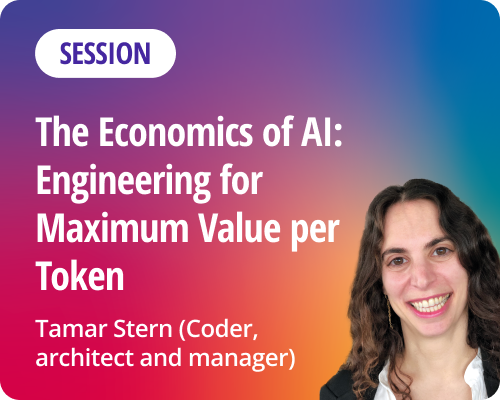
The Economics of AI: Engineering for Maximum Value per Token

SESSION

The Economics of AI: Engineering for Maximum Value per Token

AI in production also means understanding and controlling cost. With LLMs, every architectural decision, from prompts to model selection, becomes an economic factor. Many AI projects fail not technically, but economically.
This session shows how to design efficient, scalable AI systems with optimized prompting, smart caching, and targeted model routing.
Goal: Maximum value per token instead of maximum complexity.

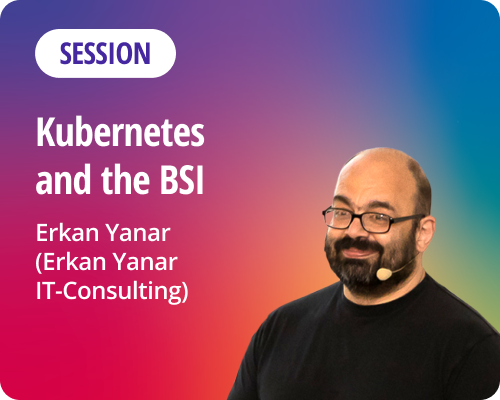
Kubernetes and the BSI

SESSION

Kubernetes and the BSI

Want to run Kubernetes in compliance with BSI standards?
Let’s break down the requirements and explore how to implement them, while also taking a lighthearted look at the world of compliance jargon.

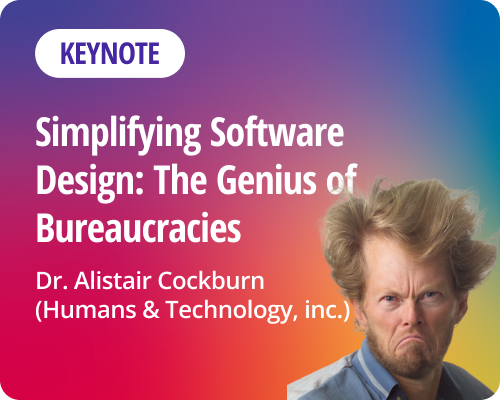
KEYNOTE

Simplifying Software Design: The Genius of Bureaucracies

In software development, bureaucracy can serve as a catalyst for good design. This keynote demonstrates how clear design structures can be derived from the question “Where does this line of code belong?” and the principles of “Not my job” and “No need-to-know.” This results in both clean system architectures and well-structured domain models. At the same time, these principles serve as a test for meaningful object responsibilities and promote robust, extensible designs that are also easily understandable for modern LLMs.

Simplifying Software Design: The Genius of Bureaucracies

Program Highlights

Whether frontend, backend, DevOps, or AI, the demands are growing. At entwickler Summit, you’ll meet those shaping software and driving the future of the industry. We provide the space so you can build what’s next.

These Tracks Are Waiting for You

Modern Software Engineering in Practice

Modern Software Engineering in Practice

Software Architecture & Decision-Making

Software Architecture & Decision-Making

Platform Engineering, DevOps & the Unpredictable

Platform Engineering, DevOps & the Unpredictable

Security & Trust in Complex Systems

Security & Trust in Complex Systems

AI Governance & Responsibility by Design

AI Governance & Responsibility by Design

The entwickler Summit Program in Detail

September 17, 2026 · One day, five tracks, 40+ sessions.

SCHEDULE

  1. Dino Esposito
    Session

    30 Years in Software — and Now Vibe Coding

    Dino Esposito, Crionet

    Vibe coding is here to stay: end of the story. After 30 years in software, I've seen waves of "revolutions" come and go: CASE tools in the 1990s, CMS wizardry in the 2000s, low-code and no-code platforms more recently. All promised to replace developers. All failed. Vibe coding is different. This is not a visual layer or a constrained platform—it is a new interface to computation. AI can generate, refactor, explain, and reason about code across stacks and domains. It already works and ships to production. What looks today like hallucination or limitation will disappear tomorrow (morning). The tools have changed, but they still desperately need great engineers and architects—not just coders. This talk explores why vibe coding is a structural shift, how it transforms software engineering, and what it means for business strategy and leadership. The real challenge: growing a new generation of engineers in a world where writing code is no longer the hardest part.

  2. Erik Wilde Thilo Frotscher
    Session

    APIs für die AI Nutzung: Wie geht das?

    Erik Wilde, Jentic · Thilo Frotscher, Selbstständig

    AI stellt neue Anforderungen an die Auffindbarkeit und Nutzbarkeit von APIs. Während APIs lange Zeit primär für Entwickler gestaltet wurden, treten nun zunehmend AI-Agenten als neue Konsumenten auf. Dadurch verschieben sich die Anforderungen: APIs müssen nicht nur technisch zugänglich sein, sondern auch für automatisierte Systeme verständlich, auffindbar und sicher nutzbar.

    Ein Blick auf die bisherige Entwicklung von APIs zeigt, dass viele der notwendigen Grundlagen bereits existieren. Gute Beschreibungen, konsistente Schnittstellen und klare Dokumentation waren schon immer wichtige Aspekte guter API-Gestaltung. Neu ist jedoch die Rolle von AI-Systemen, die APIs dynamisch entdecken, kombinieren und in komplexe Abläufe integrieren.

    Die Unterschiede zum bisherigen Vorgehen sind daher weniger grundsätzlicher Natur als vielmehr eine Frage von Skalierung und Perspektive. Statt einzelne APIs zu betrachten, rückt die gesamte API-Landschaft in den Fokus. Fragen der Auffindbarkeit, der semantischen Beschreibung und der Kombination von Fähigkeiten werden zentral.

    In diesem Kontext entwickeln sich API-Strategien weiter: von reiner Bereitstellung einzelner Schnittstellen hin zu strukturierten API-Landschaften, die AI-Systemen ermöglichen, vorhandene Fähigkeiten zuverlässig zu entdecken, zu verstehen und in wiederverwendbare Workflows zu integrieren.

  3. Wolfgang Pleus
    Session

    Ein Manifest für verantwortungsvolles Softwareengineering in Zeiten Künstlicher Intelligenz und Digitaler Souveränität

    Wolfgang Pleus, PLEUS CONSULTING

    Künstliche Intelligenz und Digitale Souveränität bilden das Spannungsfeld, in dem sich die europäische Techbranche aktuell bewegt. Fortschreitende Digitalisierung und leistungsfähige Technologien haben zunehmend Einfluß auf das Leben von Individuen und Gesellschaften. Den Menschen, die in der Techbranche arbeiten, kommt damit eine hohe Verantwortung zu.

    Lasst uns diese Megatrends zusammen denken und so zu neuen und zeitgemäßen Lösungen finden. Gemeinsam entwickeln wir das Manifest für verantwortungsvolles Software Engineering mit KI. Nach einer kurzen thematischen Einführung in KI und DS entwickeln wir gemeinsam mit allen Teilnehmenden das Manifest. Gleichzeitig lernen wir Liberating Structures Mini Specs als methodischen Rahmen kennen. Mehr kann man von einem Summit nicht erwarten, oder?

  4. Adam Bien
    Session

    Fewer Tokens, Better Apps: With Standards and Java

    Adam Bien, adam-bien.com

    Popular LLMs were trained on Java idioms, as well as open, crawlable specifications, such as JSRs and JEPs. Instead of fighting the weights, I will use the existing training corpus and well-known conventions to "vibe" code a Java application from scratch using the shortest possible prompts and minimal skills but highest code quality, while answering your questions.

  5. Christoph Henkelmann
    Session

    Ist das KI oder kann das weg?

    Christoph Henkelmann, DIVISIO GmbH

    Wird im Moment der Begriff "KI" gebraucht, sind damit meist nur LLMs gemeint. Dabei gibt es gerade im Bereich Deep Learning viele andere spannende und wichtige Entwicklungen, die man kennen sollte, wenn man KI-Features in seine Software integrieren will. In dieser Session wollen wir also erste Leitfäden aufstellen, um folgende für den Projekterfolg grundlegende Fragen zu beantworten:

    • Wann brauche ich ein LLM? Wann andere Modelle?
    • Falls ich ein LLM brauche: welches?
    • Wo finde ich solche Modelle und wie wähle ich das richtige?
    • Wann muss ich selber trainieren, wann reicht etwas von der Stange?
    • Welches ist die richtige Art, ein Modell in meine Software zu integrieren?
  6. Erkan Yanar
    Session

    Kubernetes und das BSI

    Erkan Yanar, Erkan Yanar IT-Consulting

    Ihr wollt ein Kubernetes BSI-Konform betreiben? Na dann schauen wir mal was da so gefordert wird und wie das umgesetzt werden könnte. Dabei amüsieren wir uns auch etwas über das Compliance-Sprech von solchen Dokumenten 😉

  7. Neno Loje Jörg Neumann
    Session

    Let's get real: App bauen im AI-Stil

    Neno Loje, Beratung + Schulung · Jörg Neumann, NeoGeeks GmbH

    AI-Tools sind längst mehr als Spielerei: Wie weit tragen uns moderne AI-Entwicklungswerkzeuge wirklich? In dieser Session probieren wir es aus und entwickeln gemeinsam eine App - ganz ohne selbst zu coden.

  8. Rainer Hahnekamp
    Session

    Lokale LLMs: Sind sie den Aufwand wert?

    Rainer Hahnekamp, Soverius AI

    Lokale LLMs (SLMs) lösen die Probleme von Frontier Models: Keine US-Regulierung, keine Data Leaks, keine unberechenbaren Kosten. Im Bereich Privacy existiert die Problematik bei lokaler Ausführung schlichtweg nicht mehr.

    Doch die entscheidende Frage bleibt: Liefern SLMs eine zufriedenstellende Qualität und können sie mit den Giganten konkurrieren?

    In diesem Vortrag beleuchte ich den Qualitätsaspekt und werfe ein ehrliches Bild auf den tatsächlichen Aufwand. SLMs gibt es nicht "von der Stange". Man braucht eigene Infrastruktur, gezieltes Modell-Training und das richtige Know-how im Team. Erst danach lässt sich die Frage beantworten: Ist der Gewinn an Kontrolle den Aufwand wirklich wert?

  9. Eberhard Wolff
    Session

    Menschen und KI im Feedback-Loop der Softwareentwicklung

    Eberhard Wolff, SWAGLab

    Die zentrale Herausforderung der Softwareentwicklung ist die enorme Komplexität der Systeme, die wir bauen. Diese Komplexität lässt sich nur durch kontinuierliches Feedback beherrschen.

    Jede Änderung erzeugt Rückmeldungen: durch Unit-Tests, Continuous Delivery, Monitoring oder durch Nutzer:innen. Diese Feedback-Schleifen helfen Teams, ihr System schrittweise zu entwickeln und zu verbessern.

    Softwareentwicklung wird damit zu einem Zusammenspiel aus Feedback-Systemen und menschlicher Entscheidung. Menschen interpretieren das Feedback und bestimmen die nächsten Schritte – und sind so zentral im Regelkreis moderner, automatisierter Entwicklung. Dieser Vortrag zeigt, wie man mit Hilfe dieser Erkenntnisse Software-Entwicklung optimieren kann und welche Rolle KI dabei spielen kann.

  10. Manfred Steyer
    Session

    Next-Level Frontends: Agentic Web UIs unter der Motorhaube

    Manfred Steyer, ANGULARarchitects

    Moderne UIs werden zunehmend AI-getrieben: Statt nur Eingaben zu verarbeiten, erkennen sie die Ziele der Benutzer:innen, liefern kontextbezogen Informationen, blenden passende interaktive Komponenten ein und kürzen Abläufe ab, indem sie die Anwendung teilweise selbst steuern. Daten werden aus dem Kontext abgeleitet, Formulare sinnvoll vorausgefüllt und Workflows dynamisch angepasst.

    Diese Session zeigt anhand einer konkreten Implementierung, wie die zugrunde liegenden Konzepte in der Praxis funktionieren. Wir sprechen über Tool Calling im Frontend, Structured Output, das Zusammenspiel mit State Management und Formularen, Natural Language Queries sowie Codegenerierung „on the fly", die sicher in einer Sandbox ausgeführt wird.

    Dabei werfen wir einen Blick unter die Motorhaube: Was passiert wirklich zwischen UI, Backend und LLM? Welche Schritte laufen ab, wo entstehen Fehler — und wie lässt sich die Zuverlässigkeit solcher Systeme durch gezielte Prompting-Techniken drastisch erhöhen?

    Am Ende hast du ein solides Verständnis dafür, wie Agentic UIs funktionieren — und wie du deine eigenen Frontend-Lösungen sinnvoll um diese Möglichkeiten erweiterst.

  11. Rainer Stropek
    Session

    Stop Pretending You Review AI-Generated Code Line by Line

    Rainer Stropek, software architects

    Let's be honest: nobody is carefully reviewing every line of code an AI agent produces. And that's fine, as long as you stop pretending otherwise and start building the infrastructure that actually keeps quality in check. In this talk, Rainer Stropek argues that the real skill in working with AI coding agents isn't reading their output, it's shaping their input. He shows how tight requirements, solid test data, well-defined acceptance criteria, and agentic loops with automated feedback replace the illusion of manual review with something far more reliable. Expect practical patterns from Rainer's daily work, not theory.

  12. Jeff Watkins
    Session

    Symbiotic Futures: The Human-Machine Love Affair and the Evolution of Experience

    Jeff Watkins, Compromising Positions

    We're in a world where the lines are blurred between human and machine intelligence, one where we need to build a harmonious relationship through experience.

    In his talk we'll explore how Humans and AI can work together as partners and learn to love one another. We'll discover how human-centred design principles can be used to craft AI systems that anticipate our context, needs, wants and enhance our capabilities while still respecting our privacy and autonomy. We'll also look at the invisible conversations between AI and digital systems, and how we can make this a more seamless journey.

    You'll learn about the real-world use cases and frameworks that can help you craft both your human to AI and AI to machine interactions to provide a loveable user experience for all parties.

    Symbiotic Futures is an exploration of trust, shared experience and even love, in the next era of digital interactions.

  13. Sebastian Bergmann
    Session

    Tests als menschliche Sprache: Im Loop bleiben, wenn KI den Code schreibt

    Sebastian Bergmann, thePHP.cc OHG

    Agentic AI verändert die Softwareentwicklung grundlegender als jedes Werkzeug zuvor. Pull Requests entstehen automatisiert, Code wird generiert. Und der Mensch übernimmt das Review. Aber macht er das wirklich noch?

    Als Autor von PHPUnit beobachte ich seit 25 Jahren, wie sich das Verhältnis zwischen Entwickler:innen und ihrem Code wandelt. Die aktuelle Verschiebung ist jedoch anders: Der Mensch rückt aus dem Zentrum der Implementierung heraus und droht, die Kontrolle über das Systemverhalten zu verlieren.

    Ich bin überzeugt, dass automatisierte Tests das verlässlichste Mittel sind, um in agentischen Systemen im Loop zu bleiben. Die Red-Phase in TDD, also das Schreiben des fehlschlagenden Tests, ist jene Arbeit, die KI nicht ersetzen sollte. Wer spezifiziert, was das System tun soll, behält die Verantwortung. Wer nur noch Reviews durchführt, verliert sie.

    Warum werden Praktiken wie konsequentes TDD, Mutation Testing und Architecture Decision Records unter KI-Einfluss zu unverzichtbaren Kontrollmechanismen? Wie verändert KI die Bedeutung von Code Reviews? Wem gehört der Entwicklungsprozess? Wie können wir als Profession die Bedingungen sichern, unter denen verantwortbare Entwicklungsarbeit möglich bleibt? Ich habe nicht auf jede dieser Fragen eine Antwort, aber mir ist es wichtig, sie zu stellen.

  14. Tamar Stern
    Session

    The Economics of AI: Engineering for Maximum Value per Token

    Tamar Stern, Coder, architect and manager

    As AI adoption moves from experimentation to production, a new constraint is emerging: token economics.

    LLMs introduce a cost model where every architectural decision — prompt size, retrieval strategy, model selection, and caching — directly affects system scalability and viability. Many early AI systems fail not because they don't work, but because they cannot scale economically.

    This talk explores how engineering teams can design AI systems that maximize value per token instead of simply maximizing model capability.

    We will walk through architectural patterns that significantly improve efficiency, including: hybrid AI + deterministic workflows, retrieval strategies that reduce prompt size, semantic caching and response reuse and model routing and task specialization.

    By treating AI as an economic component of system architecture, engineers can build solutions that remain sustainable at scale.

    Participants will leave with practical techniques to design cost-efficient, production-ready AI systems.

  15. Christian Schneider
    Session

    Vier grüne Häkchen – trotzdem gehackt: Threat Modeling für KI-Agenten

    Christian Schneider, Schneider IT-Security

    Eine E-Mail im Posteingang. Niemand öffnet sie, niemand klickt. Tage später stellt ein Nutzer seinem KI-Assistenten eine Frage. Der Agent zieht die E-Mail als Kontext heran, folgt den darin versteckten Anweisungen und schickt interne Daten an einen externen Server. Jede Komponente im System hat ihre Sicherheitsprüfung bestanden. Genau so lief EchoLeak gegen Microsoft Copilot (CVE-2025-32711, CVSS 9.3): kein Exploit als Code, sondern ein Angriff über die Architektur.

    Wer heute agentenbasierte Systeme baut, steht vor dem gleichen Problem: Wir prüfen Komponenten einzeln, aber Angreifer denken in Ketten. Sobald ein KI-Agent Daten abruft, Aufgaben plant, Tools aufruft und mit anderen Agenten redet, entstehen Angriffspfade über Vertrauensgrenzen hinweg, die kein komponentenbasiertes Review sichtbar macht.

    In diesem Talk stelle ich das Fünf-Zonen-Modell vor, mit dem sich die Angriffsfläche agentenbasierter Systeme systematisch kartieren lässt: Eingabeschnittstellen, Planung, Tool-Ausführung, Speicher, Agent-zu-Agent-Kommunikation. An drei Szenarien (RAG-Pipeline-Poisoning, MCP-Tool-Chain-Missbrauch, Multi-Agent-Kaskaden) zeige ich, wie Angriffe über Zonengrenzen wandern und wo Architekturentscheidungen sie stoppen.

    "Human in the Loop" heißt bei KI-Agenten mehr als ein Approve-Button zur Laufzeit. Es heißt, dass Menschen die Architektur dieser Systeme analysieren und Vertrauensgrenzen bewusst ziehen, bevor der erste Agent in Produktion geht. Das Fünf-Zonen-Modell gibt Teams dafür einen konkreten Rahmen.

  16. Uwe Friedrichsen
    Session

    Von-Neumann machines, dreams and the futures of IT

    Uwe Friedrichsen, codecentric AG

    In all our debates about the future of software development with AI, we forget something fundamental: It has never been about code! We had this von-Neumann machine. And we had ideas about what we wanted this machine to do for us. The best idea we had how to make the rather limited von-Neumann machine execute our ideas was writing code in some 3GL, like, e.g., Java, Javascript, Python or C#. But with AI, the question rises anew: Is there a better way to teach such machines our ideas? Or could there be better machines for our ideas? What have been the limiting factors that kept us at 3GL all these years? Which other options do we have?

    In this session, we take these questions and apply possible evolutions of AI in IT to them. Where does it lead us? And what does it mean for us? Let us figure out where we might be heading and prepare together for exciting times ahead!

  17. Christian Wenz
    Session

    Web-Security in Zeiten der KI

    Christian Wenz, Actition GmbH

    Die Sicherheit von Webanwendungen scheint seit Jahrzehnten ein ungelöstes Problem zu sein. Die letztes Jahr erschienene neue OWASP Top Ten der größten Sicherheitsrisiken zeigt kaum Bewegung. Jetzt kommt auch noch künstliche Intelligenz ins Spiel, was mehrere Fragen aufwirft: Werden dadurch Angriffe so gut, dass keine Verteidigung mehr möglich ist? Schützt andererseits eine KI die Anwendungen zu gut, dass endlich die Sicherheit erreicht ist, an der die Entwicklung seit langer Zeit scheitert? Und birgt der Einsatz von KI selbst neue Gefahren, vor denen wir uns verteidigen müssen? Wir werfen einen Blick auf öffentliche Sicherheitsvorfälle, Erfahrungen aus der Praxis und historische Daten rund um die Sicherheit.

  18. Alistair Cockburn
    Session

    Ask Me Anything with Alistair Cockburn

    Alistair Cockburn, Humans and Technology, inc.

    After his keynote “The Genius of Bureaucracies”, Alistair Cockburn stays on stage again where he takes questions. Bring your questions and bring your thoughts. Bring the cases that don’t fit. Bring your disagreements.

    Where do “Not my job” and “No need-to-know” stop working?

    How do these ideas hold up when systems behave differently each time?

    What does design look like when humans and machines share responsibility?

    A conversation with one of the original thinkers behind modern software design—focused on practical questions and grounded in real systems.

  19. Alistair Cockburn
    Session

    When Code Becomes Free: The Organizational Bottleneck of the AI Age

    Markus Andrezak, überproduct

    This talk explores a growing paradox: as AI removes technical bottlenecks, a new one emerges—human judgment and organizational speed. While teams are busy aligning in meetings, AI continues building—often the wrong things, but at scale.

    Using examples from advanced teams (e.g. Boris Cherny, Claude Code), the session reframes software development in 2026: the challenge is no longer writing code, but making decisions fast enough to keep up. Build to think, not think to build. Ship variants, observe outcomes, and decide based on reality.

    The real shift for leaders is not prompting—it’s designing decision architectures: turning alignment into infrastructure, decisions into deployed systems, and exploration into a disciplined practice.

    For engineering, product, and executive leaders navigating the shift from building faster to deciding faster.

  20. Alistair Cockburn
    Session

    What It Means to Be Human Now and Tomorrow in the Age of AI

    Lianne Potter, Compromising Positions

    In a world facing rising loneliness and increasingly fragmented human connection, could artificial intelligence become the companion we have always imagined? Nearly 50 years after Gary Numan asked “Are ‘Friends’ Electric?” audiences are no longer dealing with science fiction fantasy, but the growing reality of AI companions, synthetic personalities, and emotionally responsive machines.

    Inspired by Philip K. Dick’s Do Androids Dream of Electric Sheep? and the iconic film Blade Runner, this talk explores humanity’s long fascination with creating artificial companions, from the eighteenth-century Mechanical Turk to today’s AI chatbots and humanoid robotics.

    As technology becomes increasingly capable of mimicking empathy, humour, affection, and intimacy, we are forced to confront difficult questions about what it truly means to connect. Led by a digital anthropologist specialising in cybersecurity and emerging technology, this talk examines the cultural, emotional, and societal implications of electric companionship.

    Can AI truly understand culture, emotion, and love or merely imitate them? Will synthetic companions reduce loneliness or deepen isolation? And as machines become increasingly human-like, what happens to our understanding of humanity itself?

LOCATION

Berlin. Character. Community.

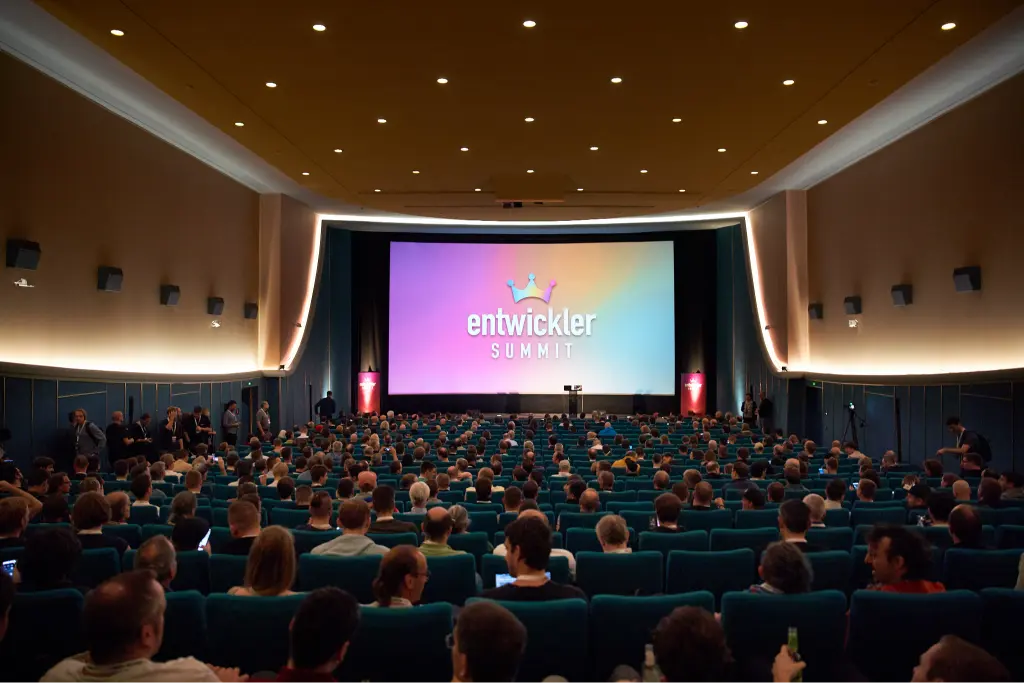
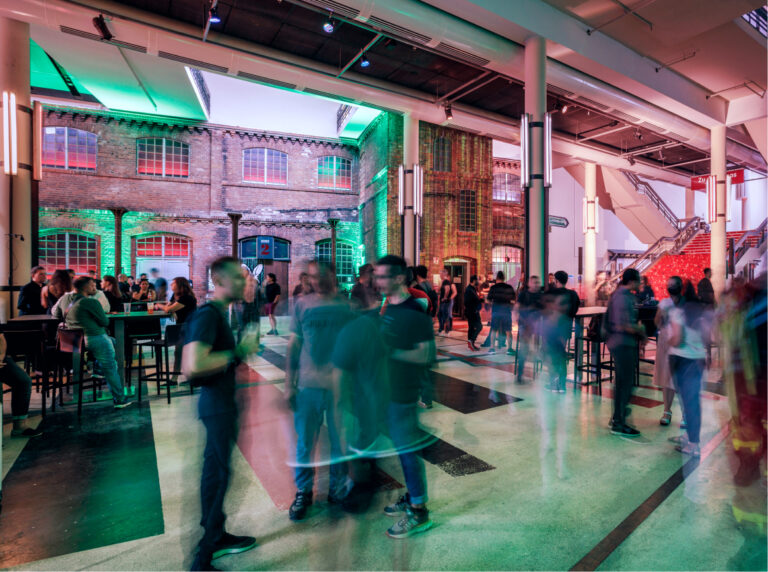
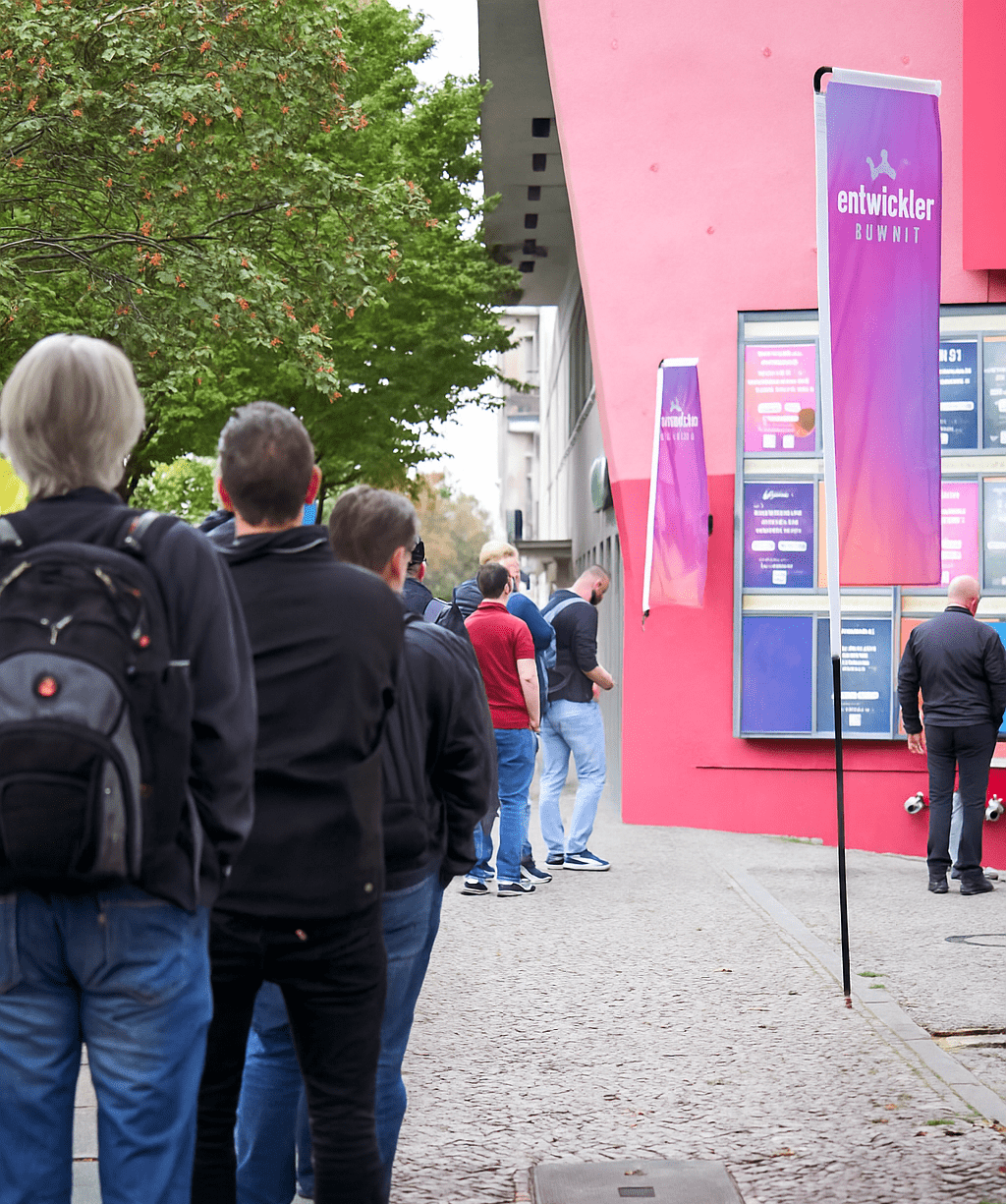
No exhibition halls, no rows of chairs under neon lights, the historic Filmtheater Colosseum provides the perfect stage for an event of this scale.

The spacious atrium offers two levels with a central stage, entertainment, and almost continuous catering. Surrounding it are five cinema halls, allowing you to move freely between sessions: step in, listen, move on.

No rigid schedule, just an event that adapts to your rhythm, with space for inspiration, exchange, and new perspectives.

Who Is This Summit For?

Target Audience

Your Community at the Summit

We bring together the key topics from our conferences: JAX, BASTA!, JavaScript Days, MLCon, DevOpsCon, and many more.

jax Community

Java

Softwarearchitektur

Agile

BASTA Community

.NET

Web

Windows

AI Innovation

DevOpsCon Logo Community

DevOps

Kubernetes Ecosystem

Lean Business

iJS Community

JavaScript

Web Technologie

MLCon Community

Machine Learning

Künstliche Intelligenz (KI)

IPC + PHP Community

PHP

Webentwicklung

API Conference + MAD Summit Community

Web APIs

Modularisierung

DDD

IT Security Community

Security

OWASP

DevSecOps

Become a Partner of entwickler Summit

Position your brand at one of the top events in the tech industry. Connect with the community, share your insights on current trends, and showcase your innovative solutions on the Center Stage.

What our community says

Excellent

4,5 Star Rating - Hervorragend

4,3/5

Trustpilot

Professional organizer

The conference was once again a complete success. The program offered a perfect balance of inspiring speakers, relevant topics, and diverse exhibitors.

5 Star Rating

Aziz U.

Great booking, support, and follow-up

The integrated booking platform (with minor details aside) and the app work very well. The availability of slides and videos is also excellent.

4 Star Rating

Lars I.

One of the coolest events

…for developers. Great catering, great networking. Highly recommended.

5 Star Rating

Emanuil A.

Tickets are available now

Exclusive Free Tickets for Members

entwickler.de Fullstack

BECOME A MEMBER

Become a Fullstack Member now

Ticket abholen

GET YOUR TICKET

Available from May 12, while supplies last

Sei dabei

BE A PART

Meet the community on September 17

Who Gets a Free Ticket?

entwickler.de Fullstack

Fullstack Members

Fullstack Elevate

Elevate Members

entwickler.de Events

Participants of trainings and conferences*

*Participants who attended selected events organized by the entwickler.de community between January 1, 2026, and December 31, 2026, will receive a free ticket to the entwickler Summit. These include, among others, the conferences DevOpsCon, MLcon, JAX, API Conference, International JavaScript Conference, IPC, Webinale, IT Security Summit, VibeKodeCon, BASTA!, W-JAX, Platform Engineering Summit, IT Security, and the Serverless Architecture Conference. Participants in training sessions such as the MAD Summit, Kubernetes Camp, Software Architecture Camp, IT Security Camp, and other training sessions offered by the entwickler Academy are also eligible for a free ticket.

How to Get there

LOCATION

Filmtheater Colosseum, Berlin

Schönhauser Allee 123,
10437 Berlin

Our Media Partners

Contact

Software & Support Media GmbH

Schwedlerstraße 8
60314 Frankfurt

Phone: +49 (0)69 630 089 0
Fax: +49 (0)69 630089 89
Email: [email protected]

entwickler summit
summit 2025